

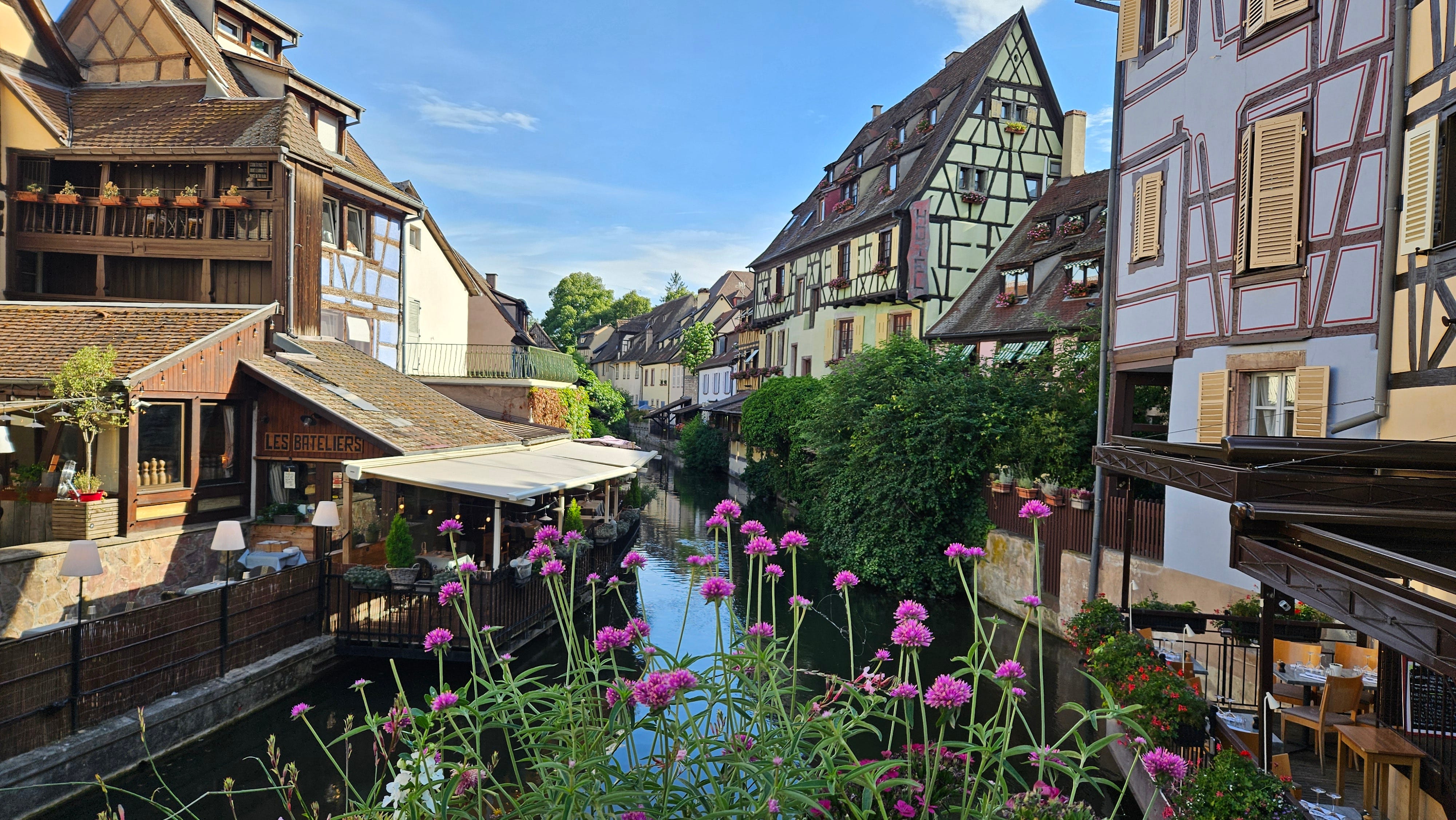
This summer, I spent a week in Alsace with my parents, wife, and children. (We also visited Hamburg - see my post about Germany’s second-largest city here.) I was excited to see Alsace. In 2024, I spent two weeks in Northwest France, one of my favorite vacations of all time. I fell in love with the cute towns and French culture. Ever since, I’ve wanted to visit Alsace, a region in Eastern France known for having some of the most fairytale like towns in Europe. Here are some thoughts:
Alsace is quite literally the crossroads of Western Europe. Situated in France, but on the border of Germany and Switzerland, the area is a fascinating mix of Franco-Prussian culture. Depending on the century, Alsace has been part of “the Kingdom of Alamannia, the Frankish Empire, Lotharingia, the Holy Roman Empire, France, and the German Empire.” (Wikipedia) The people there have their own dialect. The region is French, but sauerkraut, called choucroute, is the most popular food. A lot of places will claim to be a mix of cultures, but it’s usually 90% of one and 10% of another. Alsace truly is a mix of both France and Germany.
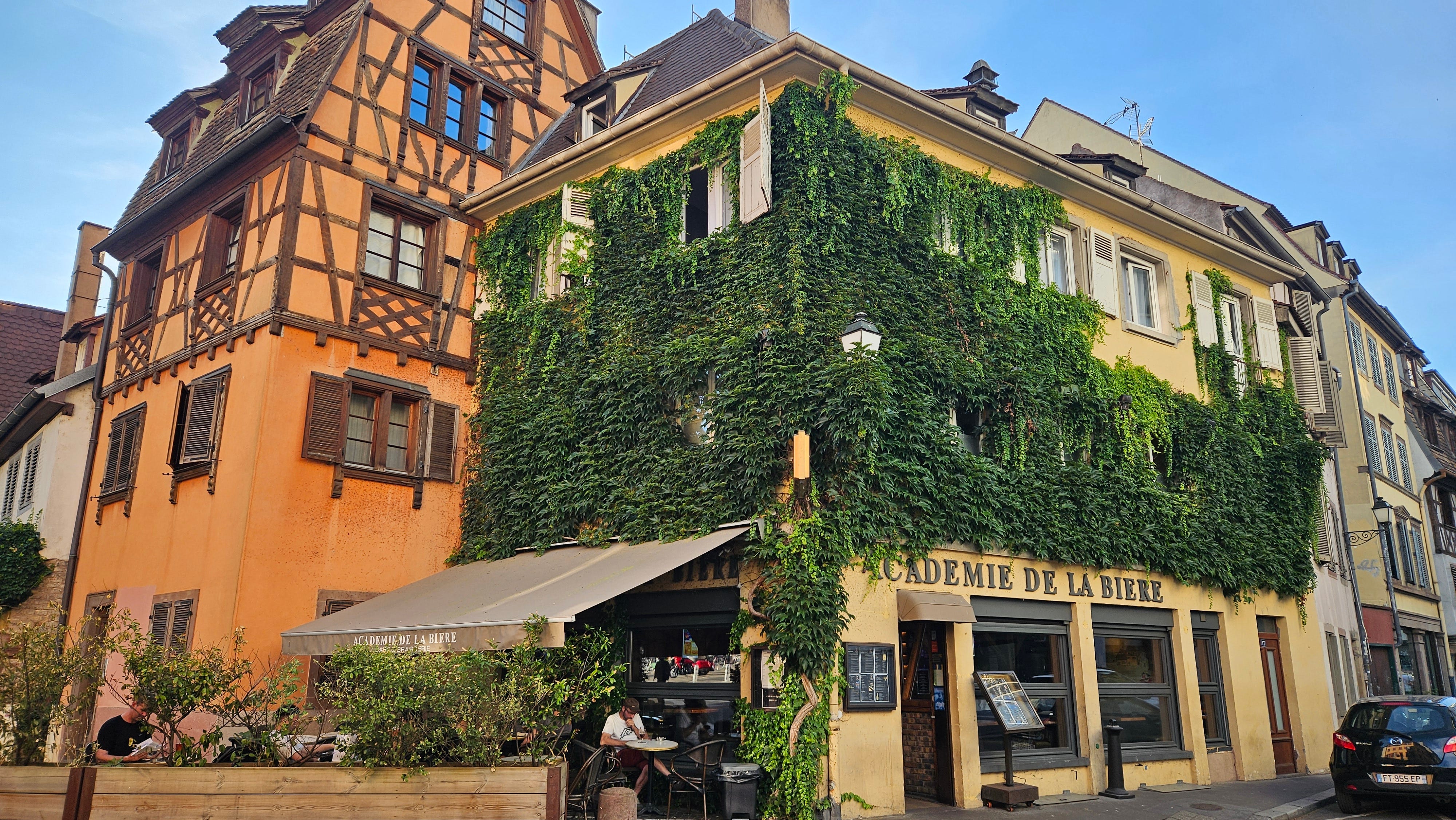
Strasbourg, the largest city of Alsace, is a gem. There is block after block after block of beautiful buildings. Some may be tempted to skip Strasbourg in favor of the gorgeous small towns and villages around the area, but this would be a mistake. It’s hard for me to think of a city that has such a large and preserved old town but isn’t a top-tier tourist attraction. I couldn’t believe that on every walk we were ambling up and down streets with centuries-old buildings straight out of a movie.
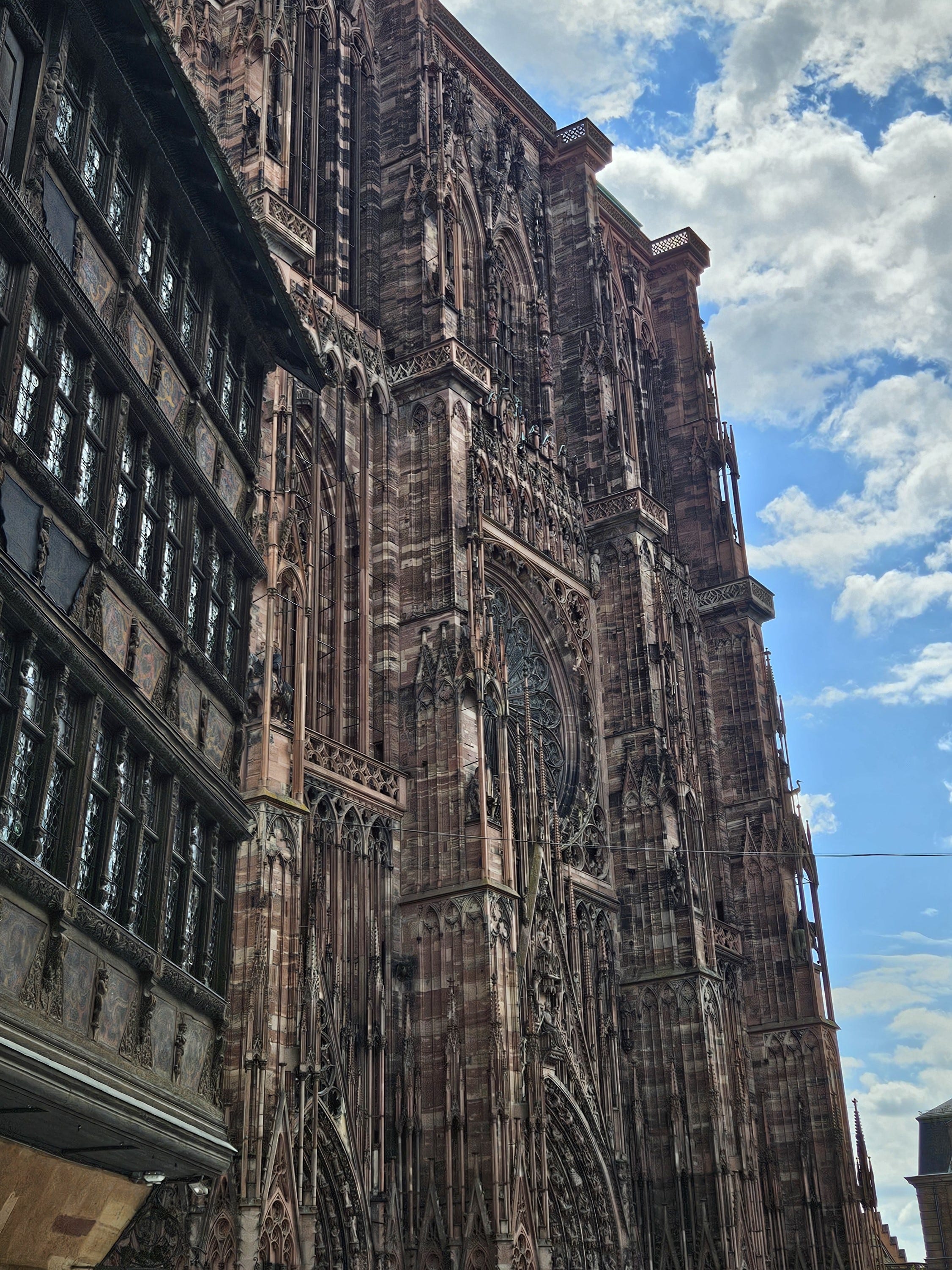
Along with cute, walkable areas, Strasbourg has a few worthwhile attractions. The biggest, both literally and in terms of popularity, is the Strasbourg Cathedral. Finished in 1439, the Strasbourg Cathedral was the tallest building in the world until 1874, when it was passed by St. Nicholas Church in Hamburg. The Cathedral is the tallest structure built in the Middle Ages, and is one of the best examples of Gothic architecture of all time. The exterior is, simply put, extraordinary. Hundreds of statues on the facades. The central portal is astonishing in its detail and complexity. The interior is more austere, although the church does have one of the best collections of stained glass in the world, which even my very non-architecturally-knowledgeable family noticed. The cathedral is also home to an elaborate astronomical clock that dates from the 19th century.
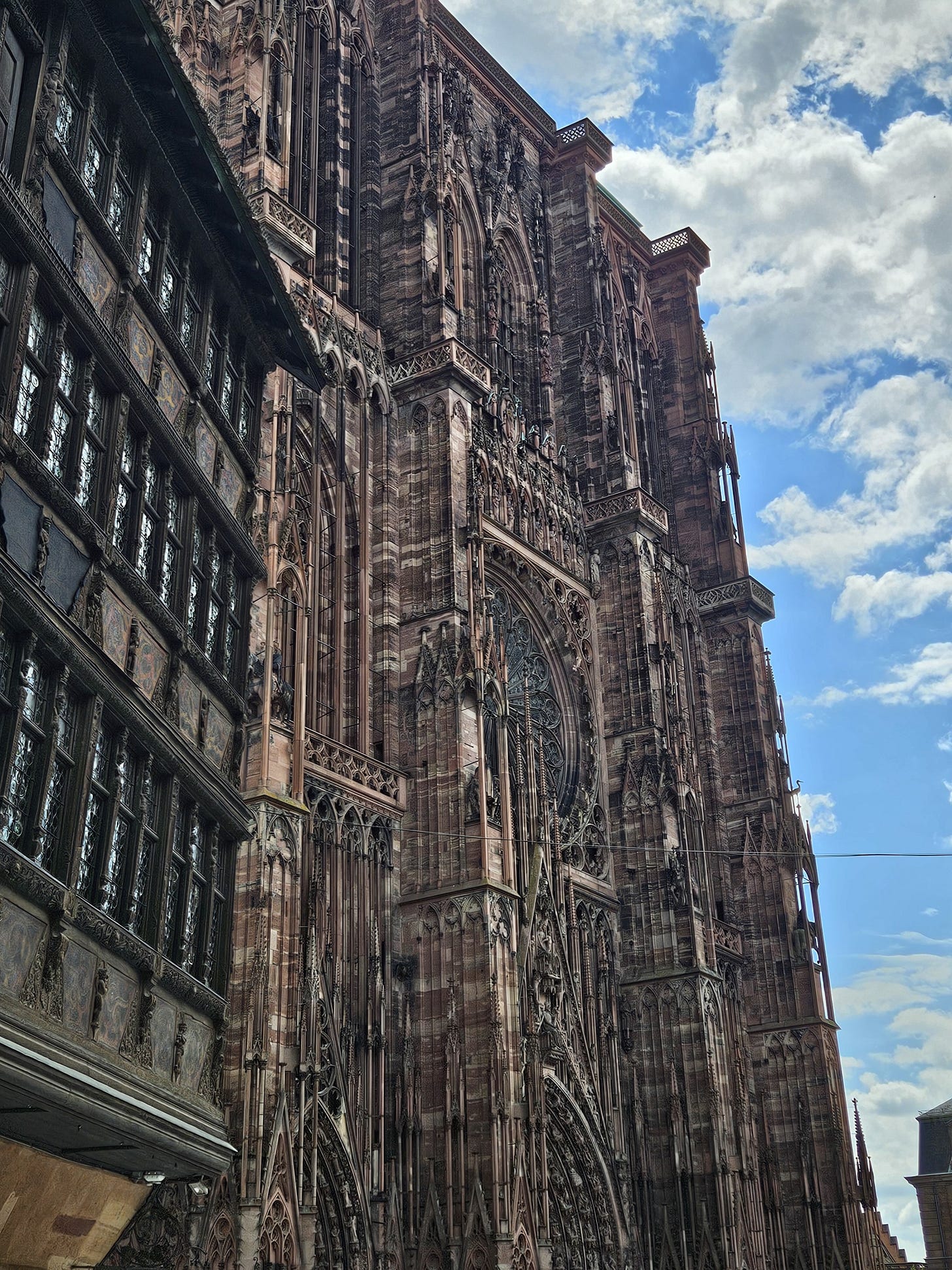
Strasbourg Cathedral, Author Photo The reason most people visit Alsace, however, is for the towns and villages. I don’t think I’ve ever been somewhere with so many gorgeous towns in such close proximity. Colmar is the main tourist draw and where we stayed, but there are many alternatives. Eguisheim, Riquewihr, Kaysersberg, Ribeauvillé, Obernai, Turckheim, etc. All beautiful towns, and all within a one hour drive.
We visited Riquewihr, Kaysersberg, and Eguisheim on day trips and loved all three. Riquewihr is probably the most crowded, and felt almost too perfect at times. Eguisheim is the smallest and is unique in that the main drag, rather than being a central street through the heart of town, is a narrow road that goes in a complete circle just inside the Medieval walls. In the center of town is a postcard-perfect square. My favorite of the three was Kaysersberg, which felt more lived-in than the other two, but you really can’t go wrong.
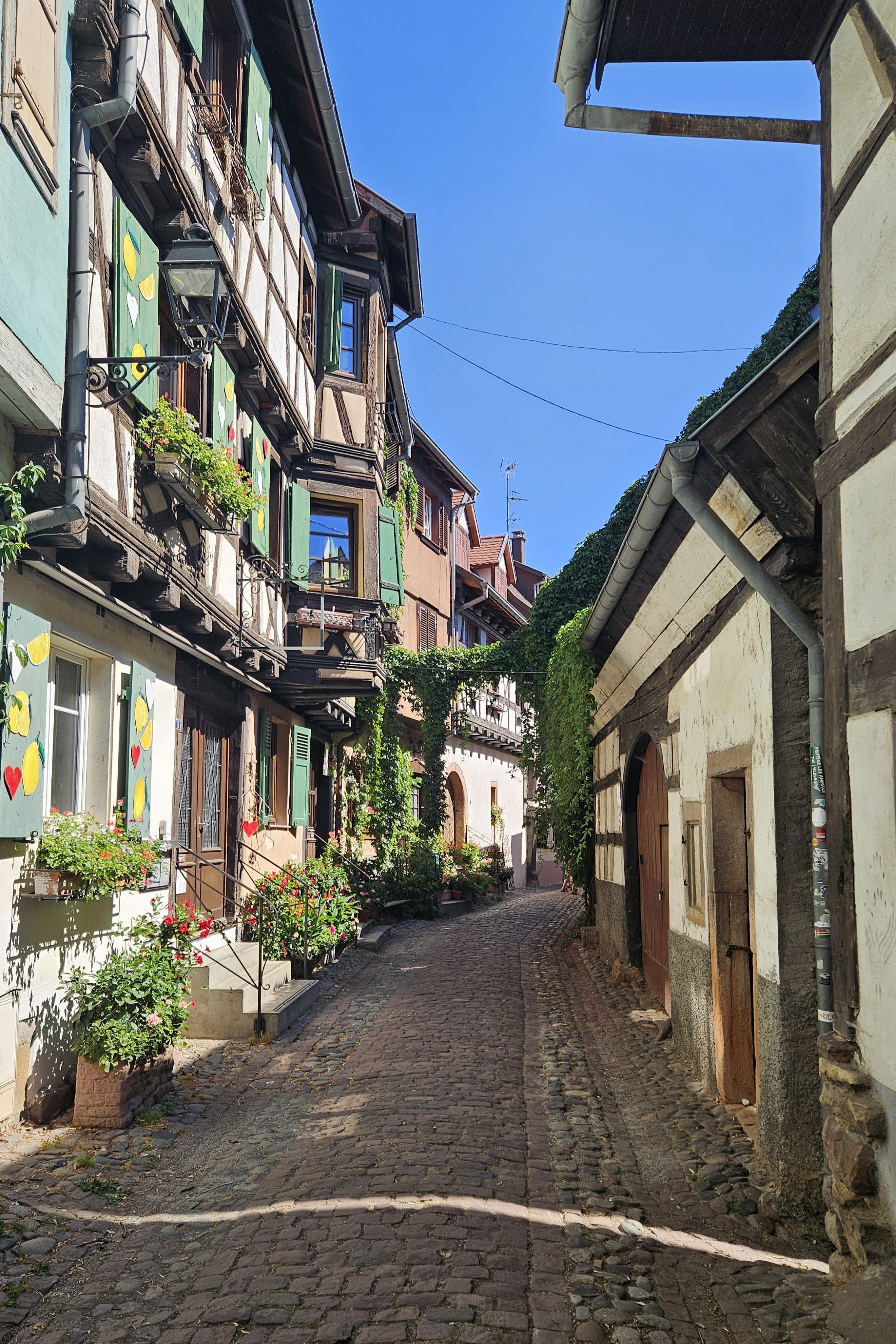
Despite visiting in July, the crowds were bearable. (The heat, on the other hand… let’s just say I recommend against doing a three-generational trip to a region with almost no air conditioning during the worst heatwave in Europe’s history.) In fact, summer isn’t the main tourist season. Alsace is most known for its Christmas markets, something my entire family agreed would be worth coming back to see, even though I was told the crowds are fearsome.
There are perhaps two negatives to Alsace. First, although the food is good, it isn’t as good as mainline French cuisine, which I view as the best in the world. The combination of French food and German food is a bit like putting ketchup on your steak. I like both steak and ketchup, but the latter is best on a cheeseburger.
The other detraction, is that other than the Strasbourg Cathedral, there aren’t many top attractions in the area. Alsace is more about walking through the streets, walking into stores, and drinking either coffee or beer at an outdoor table throughout the course of the day. Those looking for headline attractions might be disappointed. There aren’t a lot of top churches, museums, castles, or palaces. On the other hand, those who want to live in the “Beauty and the Beast” will be in heaven. You could practically see Belle walking down dozens of Alsatian streets.
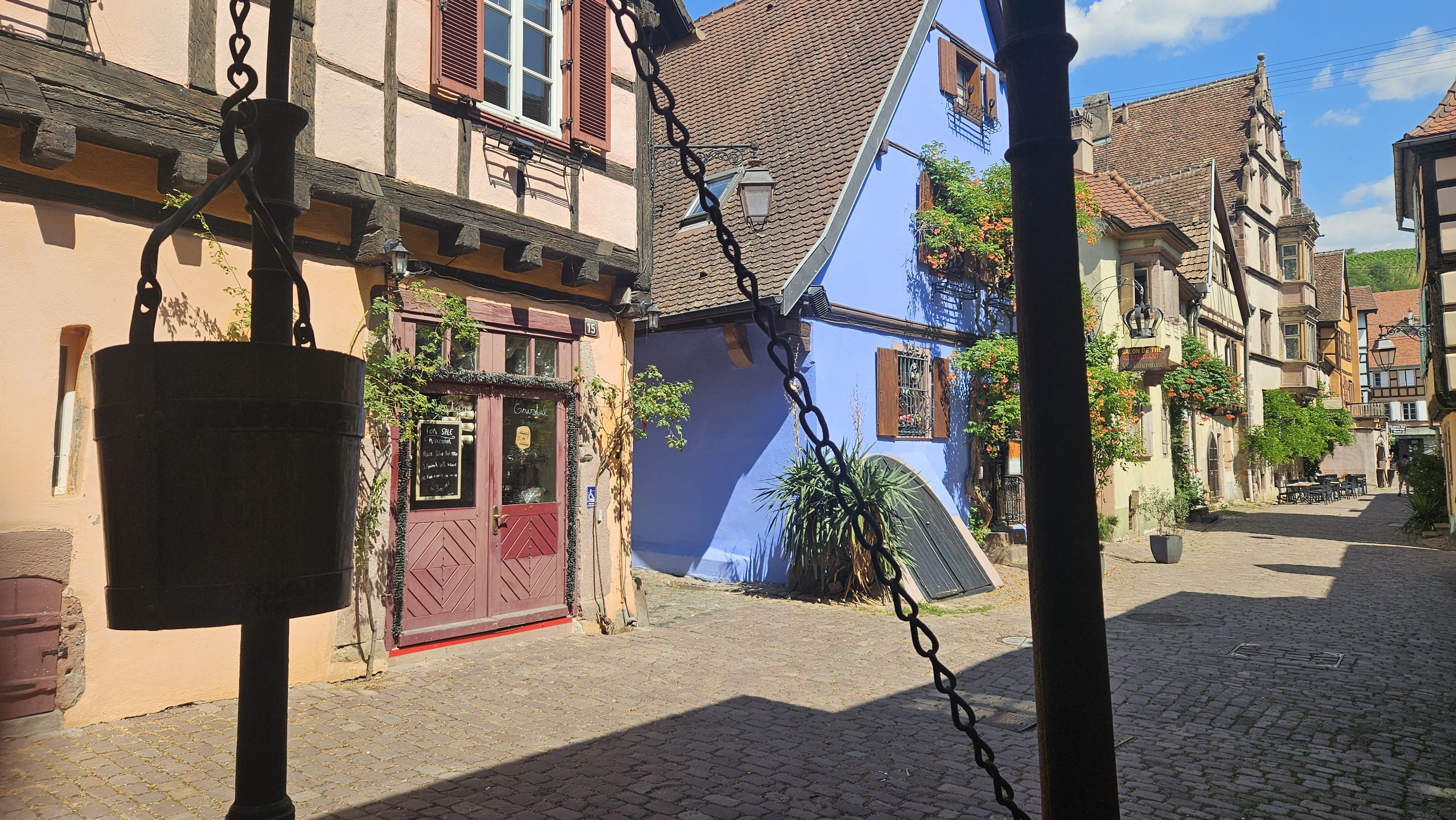
I’m running out of superlatives writing this post. Beautiful, gorgeous, stunning, astonishing, postcard-perfect. It’s probably getting repetitive to read, but Alsace really is that special. It is just town after town after town. All in a very compact area. Anchored by Strasbourg. For those wanting to get away from the Romes and Londons of the old country and visit small-town Europe, put Alsace at the top of your list.