

The Eternal City still earns its moniker. I was recently in Rome for the fourth time, but that’s a bit misleading. My first three visits were all quick stops as part of longer vacations. The first was en route to Greece. The second, a day trip from a cruise ship. The third, a stop on the way to Tuscany. As a result, I felt like I’d never really done Rome. On top of their side-quest nature, my second and third visits were with first-time visitors. Consequently, I’ve basically followed the same Rome-in-a-day itinerary three times while ignoring the rest of the city. I’d seen the Vatican and the Colosseum on every visit but had never set foot in Piazza Navona. This trip was meant to move beyond most of the premier sites and focus on Rome’s second-tier attractions. Here are some notes.
There is a stupendous amount to do in Rome. Having already visited the city’s biggest headliners, I assumed I could see everything else I wanted in roughly four days of intense sightseeing.
Ha ha ha. ha.
During the planning phase, I quickly realized that many worthwhile sites weren’t going to make the cut. Once there, despite an efficient schedule and almost no downtime, I didn’t come close to finishing my itinerary. There is just so much to see, maybe more than anywhere else on earth. Rome would be a world-class destination with only its ancient ruins, its Catholic churches, or its walkable neighborhoods. Having all three in one place is almost too much to wrap one’s head around. A tourist could easily spend a full week focusing on just one of the three.
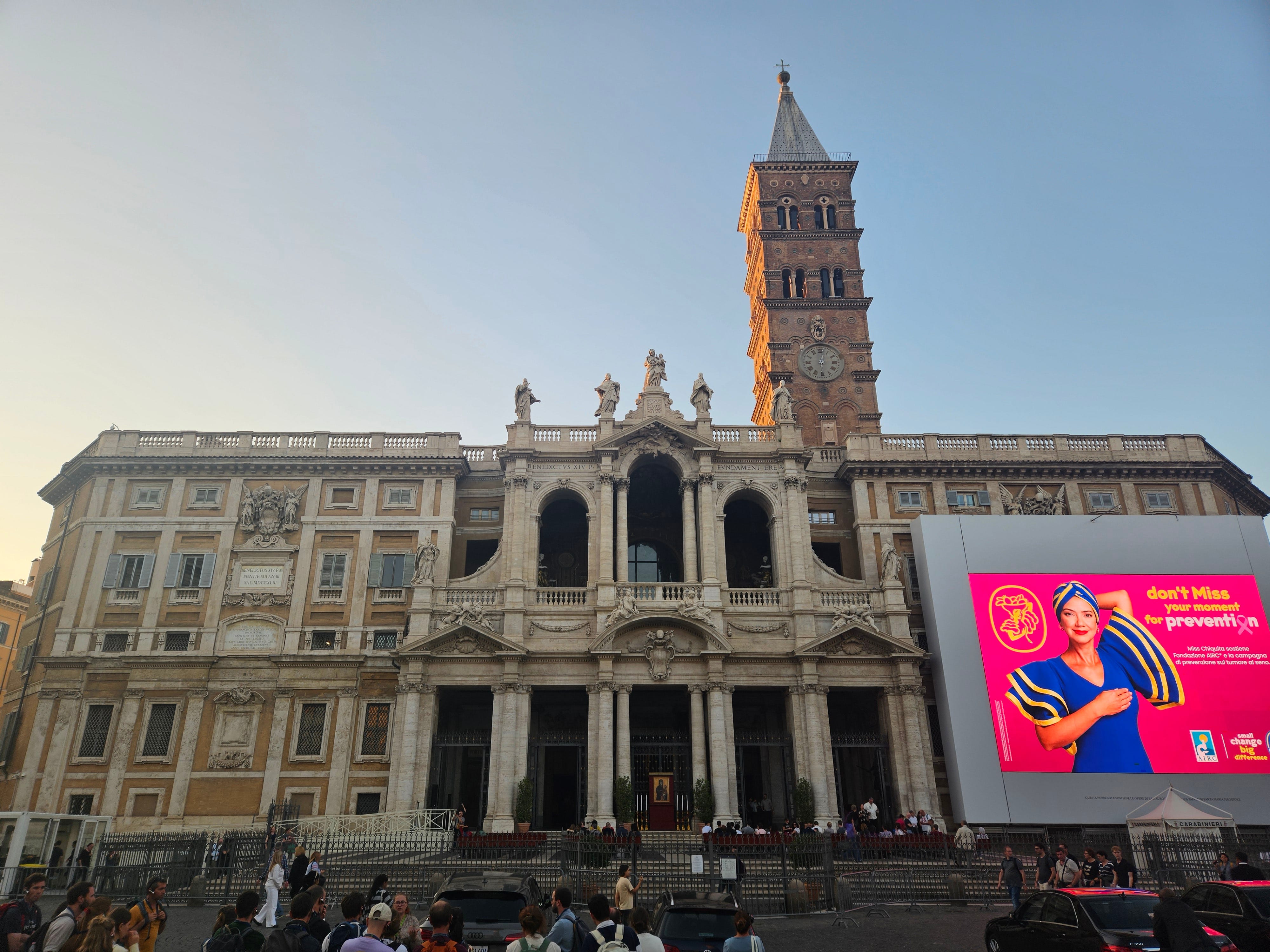
The primary focus of my trip was the churches. In this regard, the city stands head and shoulders above everywhere else. Just as many cities have canals but Venice is the undisputed king, Rome is the champion of churches. It’s to the point of absurdity. There are churches that don’t even crack the top ten here that would be premier tourist attractions in a typical European city. Yes, there’s St. Peter’s Basilica and the Pantheon, but there are plenty of other important churches as well. Along with St. Peter’s, Rome has three other major papal basilicas. There’s the Archbasilica of St. John Lateran, which is actually the highest ranked church in all of Catholicism. Then there are the Basilica of St. Mary Major and the Basilica of St. Paul Outside the Walls, both enormous churches that rarely have more than a five-minute line to enter.
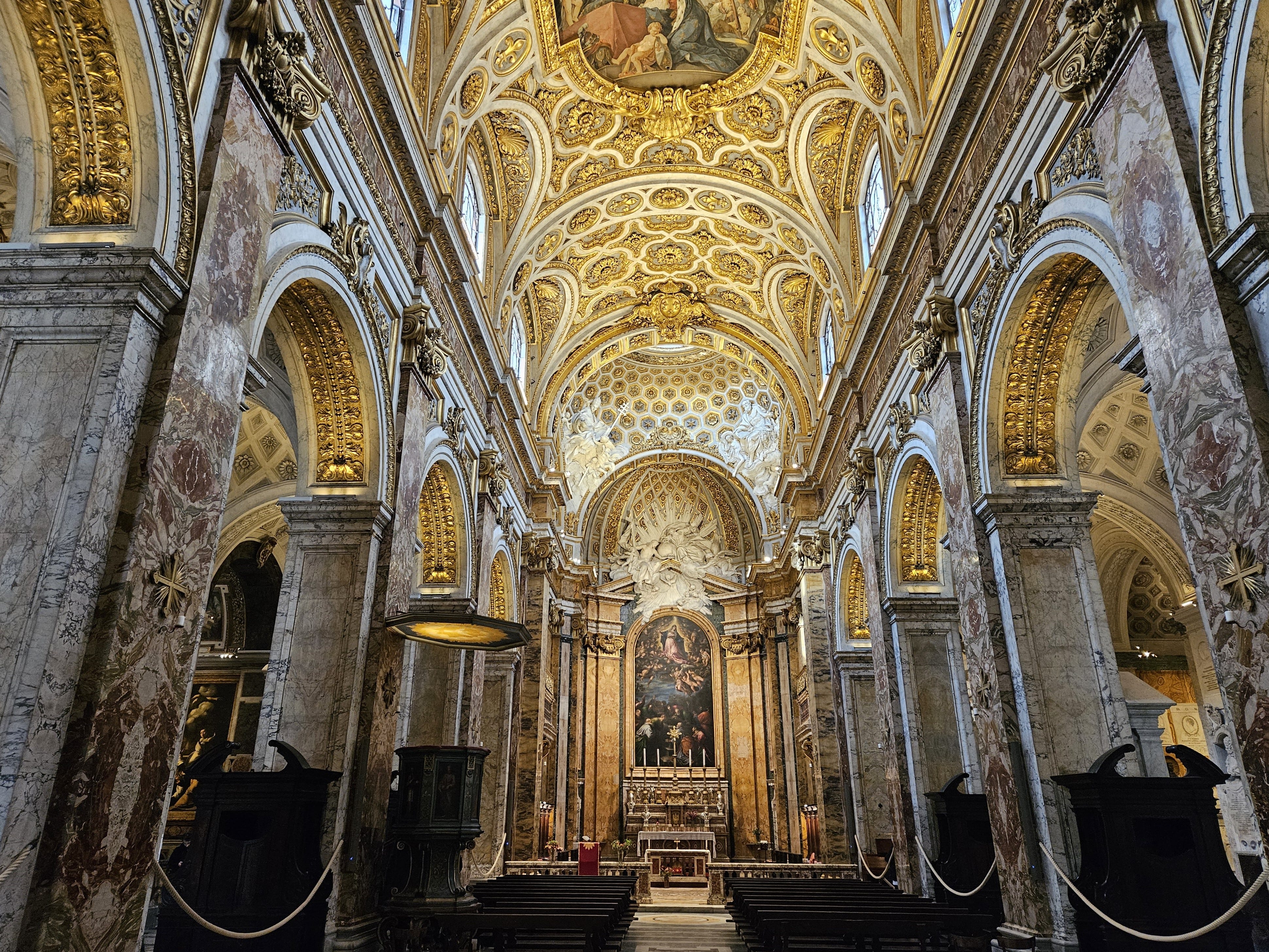
Beyond the massive papal basilicas, dozens of Rome’s 900+ other churches are worth visiting. I had never heard of the Church of St. Louis of the French, which is kind of incredible given that it holds not one, not two, but three Caravaggios, including one of his masterpieces, The Calling of Saint Matthew. Then there’s Sant’Agostino, which has both a painting by Caravaggio and a fresco by Raphael. The Church of Sant’Ignazio has a ceiling almost as impressive as the Sistine Chapel’s. Bernini’s masterpiece, the Ecstasy of Saint Teresa, sits in the oft-overlooked Santa Maria della Vittoria. Michelangelo’s Moses is in San Pietro in Vincoli. The list goes on and on and on. It’s extraordinary. No other city comes close to this bewilderment of riches. Best of all for the budget tourist, all are free to enter.
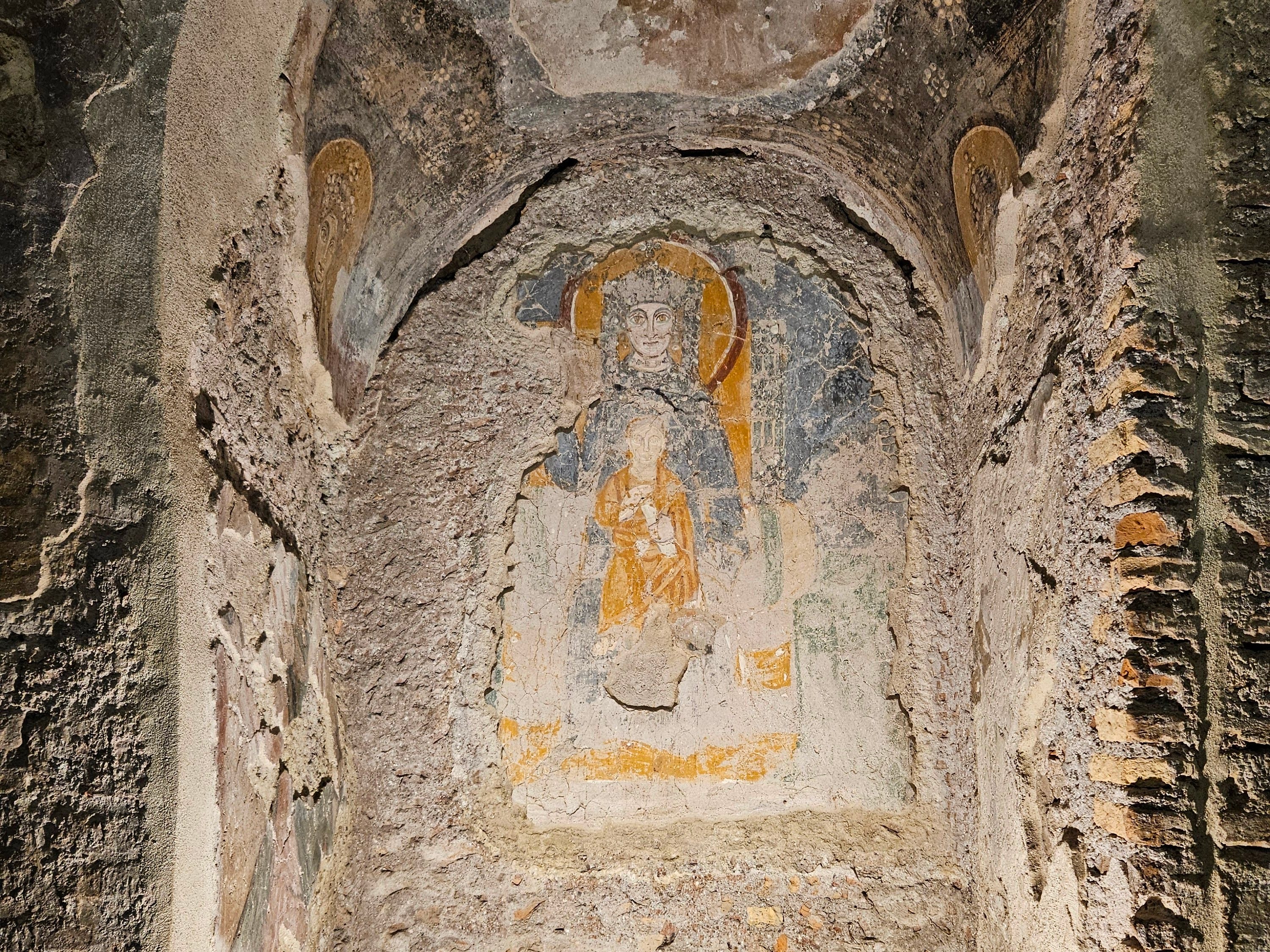
One unique spot is the Basilica of San Clemente, near the Colosseum. The main, “new” church is an 11th-century minor basilica, a building that would be a highlight in most European cities but is a dime a dozen in Rome. Underneath this already millennium-old structure is a real treasure. Walk down a flight of stairs, and you find yourself in a fourth-century church, one of the oldest in the city. Strolling through this ancient basement is a bit surreal. Romans worshipped in this very spot during the era of Theodosius the Great and the other late emperors. If that weren’t remarkable enough, below it, down yet another staircase, lies a third layer: a Roman temple thought to have been used by the mysterious Cult of Mithras. As one descends deeper and deeper underground, the centuries peel back before one’s eyes. I’ve never seen anything like it. People have stood and prayed here, first as pagans and then as Christians, for almost two thousand years.
I would be a better Catholic if I lived among such splendors. I understand the criticism of the immense resources it took to build these churches, and still takes to maintain them, but as a practicing member of the faith, I found the surroundings exhilarating. Seeing priests, nuns, and pilgrims walking the streets made me feel part of a community in a way I usually experience only while attending Mass in America.
I still think practicing Catholics should get some kind of card or secret handshake to cut the line at St. Peter’s.
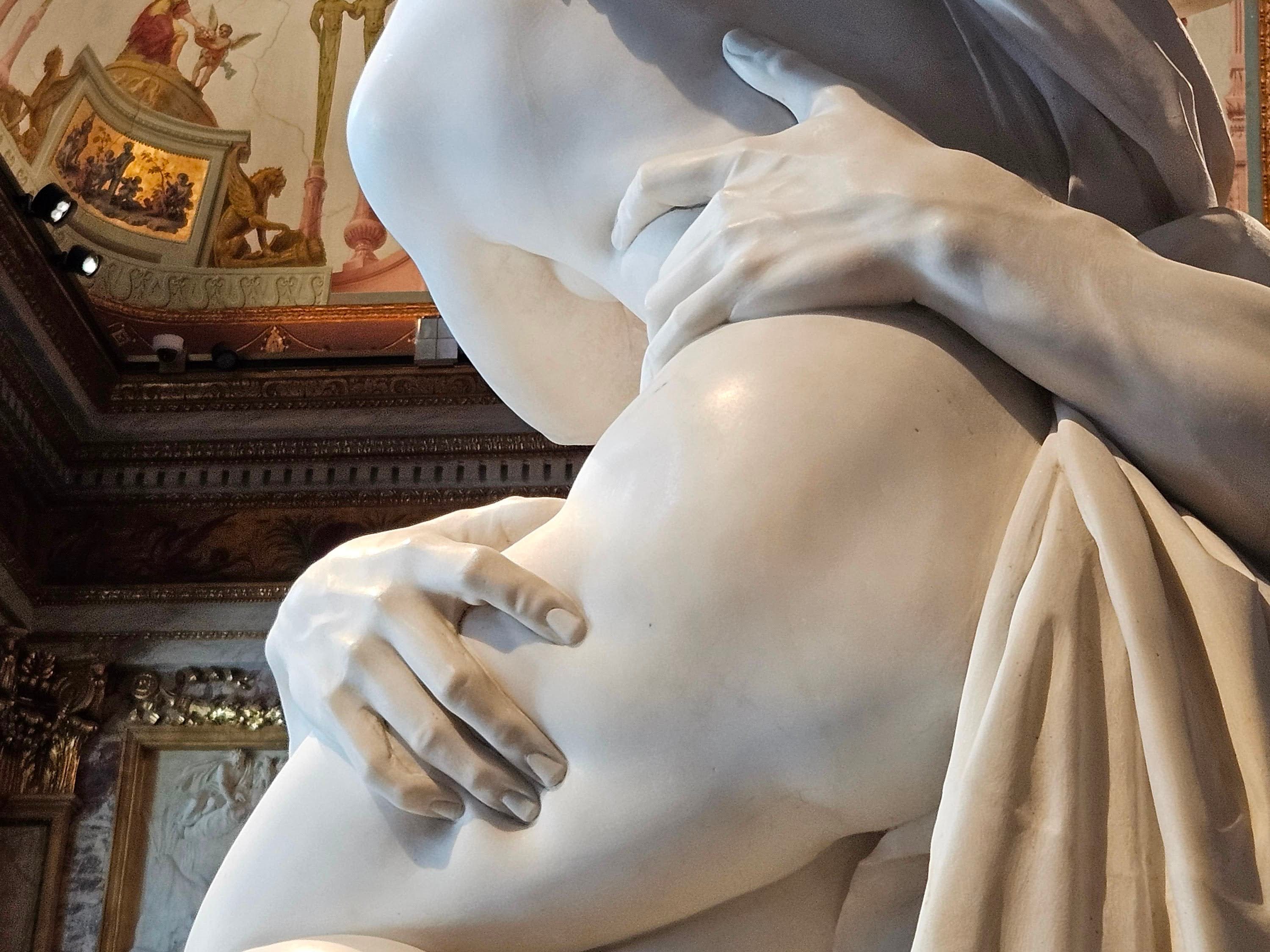
A second focus of the trip was art. Besides the many churches, I visited the Galleria Borghese. It may lack the fame of the Louvre or the Prado, but the Galleria Borghese can lay claim to being, room for room, the best art museum in the world. In addition to several Bernini masterpieces, this small museum has Roman sculptures, ancient mosaic floors, and paintings by Caravaggio, Raphael, Rubens, and Titian. Every room holds top-tier works. The building itself is a classic 17th-century Italian villa with all the trappings. The museum also enforces strict capacity limits, so while visitors won’t have any of the art to themselves, they also won’t have to contend with the crushing crowds of the Sistine Chapel.
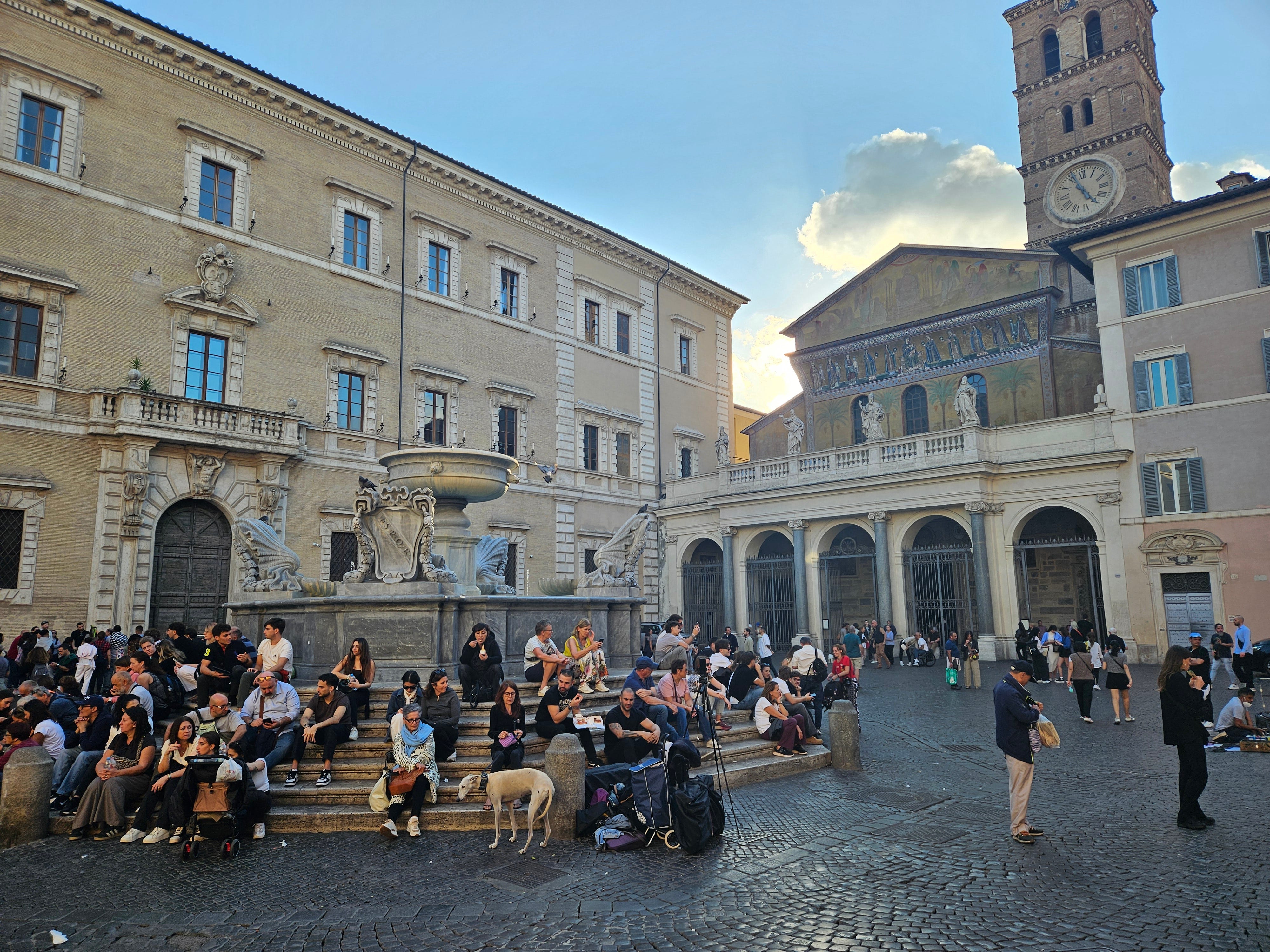
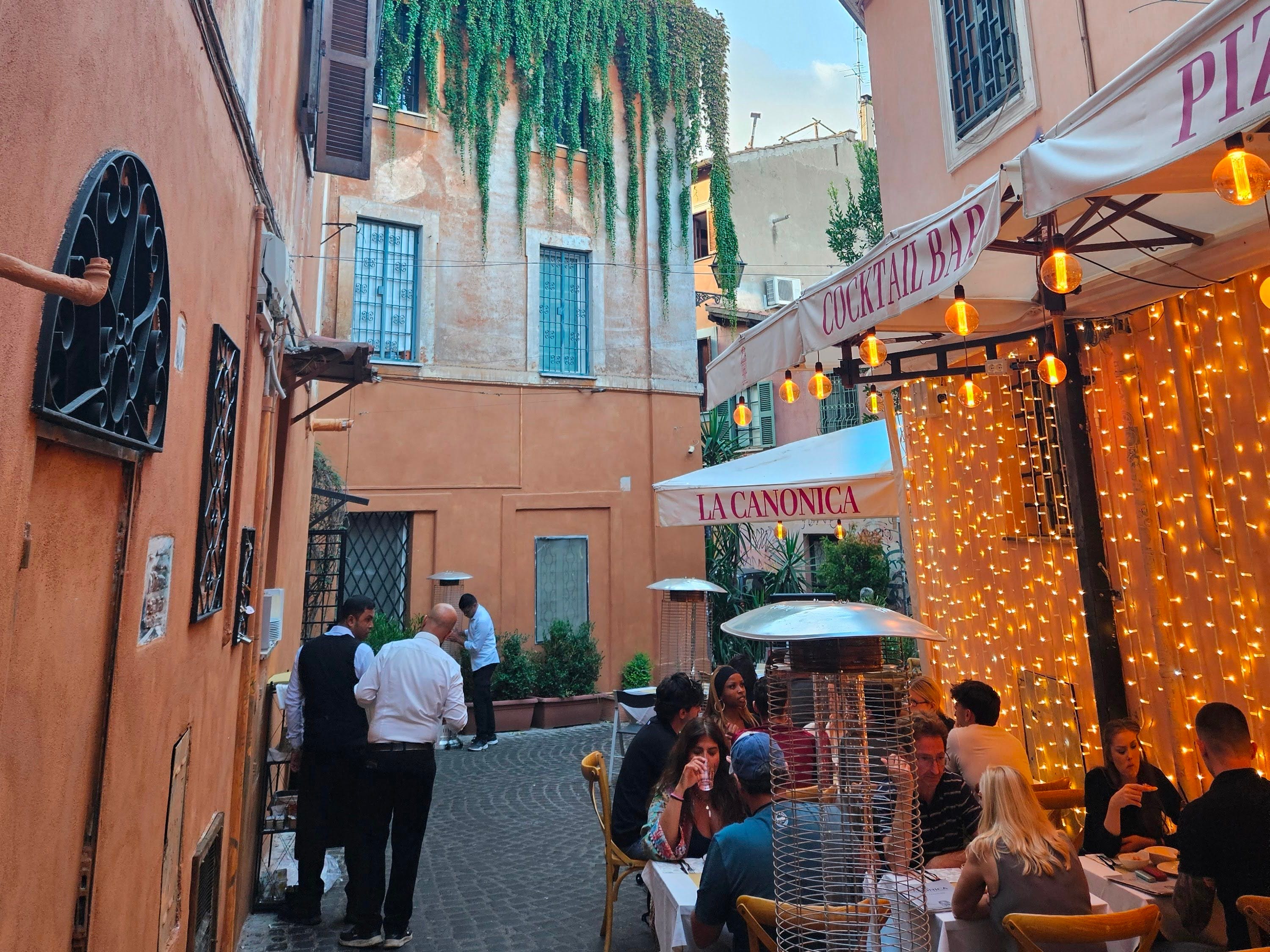
Third were the neighborhoods. One of my favorites was Monti. Countless bars, restaurants, and quiet streets fill this area just outside the historic center. Best of all, Monti sits right next to the Colosseum. Nothing beats stepping out of a trattoria and seeing the lit-up arches of Rome’s most recognizable landmark a few blocks away. The neighborhood of the moment, however, is Trastevere. Located on the right bank of the Tiber, Trastevere has a fiercely independent history. Longtime locals take pride in how rarely they cross the river into central Rome. Twenty years ago, the area was a semi-secret enclave, visited mostly by those in the know. Today, it’s a full-blown tourist attraction, and it’s packed, especially on weekends. Even so, it’s a wonderful area to visit. Hundreds of cafes and restaurants spill out into the streets. Cars are few and far between. Street performers draw audiences in the public squares. It’s still part of a major city, but Trastevere has a different feel from the rest of Rome.
Beyond the churches, art, and neighborhoods, there are plenty of sites I didn’t make it to, especially those tied to ancient Rome. I still haven’t been to Castel Sant’Angelo, the Capitoline Museums, or the Baths of Caracalla. Those will have to wait for the next trip.
Rome really does have it all. Along with Paris, Tokyo, and New York, it’s one of those rare cities where a tourist could spend a week and still not see everything. Its sheer number of churches, museums, and walkable neighborhoods makes that an easy bar to clear. Despite all the superlatives I’ve bestowed on the Eternal City, I haven’t even touched on one other reason to go — the food. What a place. I know I’ll be back for a fifth visit someday soon.