

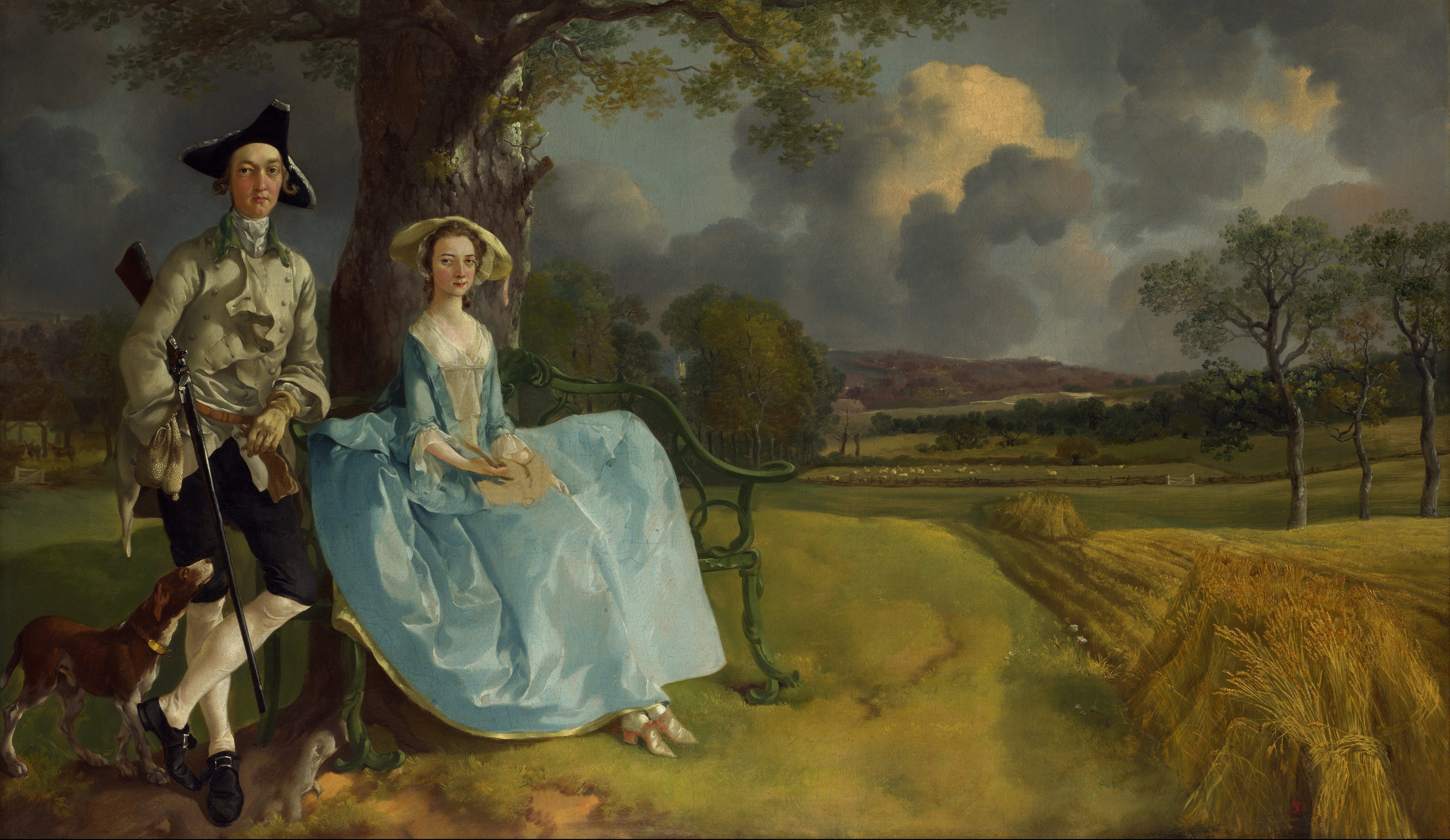
For most of the Middle Ages, England had two distinct social classes. At the top was the nobility. These were the dukes and earls, the marquises and barons. These few individuals, less than one percent of the population, ruled over the peasants. Although poor by today’s standards, the medieval nobility had immense relative wealth, more than the other 99 percent of the population combined. The rest were commoners. A lucky few of the commoners were merchants or tradesmen, but all the rest were farmers. They tilled the land of the nobility, surviving on whatever scraps they could manage to scrounge.
Then, during the 15th century and the early Renaissance, a new class began to form: the landed gentry. The landed gentry did not have titles or hopes of becoming royals. Instead, they were landowners with means but no official social status. Although they comprised less than 3 percent of the population, even when broadly defined, they changed England forever. No longer were people either rich and titled or poor and untitled. Now, there was a new breed: those who were rich but untitled.
The landed gentry became a powerful force in English life. They were not the nobility, but they slowly accrued enough wealth to develop their own spheres of power. Some families of the landed gentry married into the nobility. Others slowly faded into poverty. But many families kept their status for centuries. Generation after generation, families kept substantial land holdings and wealth. They were a dominant force of the local community, handing power down from father to eldest son. Those born into the landed gentry weren’t guaranteed success, just as those born as simple commoners weren’t guaranteed poverty, but the odds were certainly stacked for and against. Culture and regulation meant the eldest sons of the gentry would inherit a fortune. Those born into peasant families were likely to live and die as peasants themselves.
This was not a good system. For centuries, wealth stagnated. Those living in the 17th century didn’t have a significantly higher standard of living than those who lived in the 7th. There were many reasons for this, but one was a lack of economic mobility. The haves were able to keep, and the have-nots unable to procure.
The United States is showing signs of heading that direction.
To be sure, this comparison is limited. America of the 21st century is far, far more equal than England of the 16th century. Income mobility is exponentially higher. Every year, millions of Americans increase (and decrease) their incomes by substantial amounts. It’s useful to use American presidents as a barometer. Some, such as Trump and the Bushes, came from money. Others, like Biden, were middle-class. Then some, like Obama and Clinton, were lower-class, at least for part of their childhoods. America is not medieval England.
That said, it’s impossible to look at the wealth of the United States and not recognize that property has become a potentially self-propelling engine of wealth. Somewhere in the neighborhood of $84 trillion is going to be passed on to Gen Xers and Millennials over the next 20 years from the older generations. This has been dubbed “The Great Wealth Transfer”. The Baby Boomers are beginning to die of old age. Some of their wealth is going be spent maintaining a high standard of living and consuming healthcare, but much will be passed on to the younger generations.
A lot of this wealth being passed down isn’t going to be in the form of equity or gold bars. It’s real estate. Housing. There are literally millions of millionaires in the United States today whose main source of wealth is their house. These aren’t mansions or private islands. They are above-average single-family homes that are now in highly desirable areas. Homes once owned by factory workers but are now bought by doctors and lawyers.
The children of these individuals will someday inherit an immensely valuable asset. Not because their parents worked harder or smarter. But because their parents bought property in the 1980s in a place that both 1) became popular to live in and 2) curtailed new housing from matching demand. The housing market nationwide has increased by almost 500 percent over the last forty years. What was once a simple and wise investment has become a good financial investment. Those who chose to buy property decades ago stand to bequeath immense wealth to their children. Those who didn’t buy in the 1980s will, by and large, not. Property ownership will become the primary driver of inequality. Those who have property will be able to borrow against it, increase their wealth, and bequeath similar amounts to their children. The rest will be on the outside looking in.
This is already happening in California. Due to a series of laughably short-sighted regulations clearly crafted to make the rich richer, the children of property owners in the Golden State now have an immense advantage in life.
California starts out by doing one thing right: setting the assessed value the same as the sale value. If someone buys a house in California for $700,000, then the assessed value is $700,000. Property taxes are generally around 1.2 percent of assessed value.
Then the system breaks down.
Proposition 13, passed by referendum by California voters in 1978, limits assessed value to a two percent increase per year. Even if property values increase by five percent a year, which is conservative by California standards, the assessed value only increases by two percent. Over decades, this adds up to a huge difference. Someone who bought a house for $200,000 in 1995, its assessed value today would be at most $362,000, even if the home’s value on the open market is $1.5 million. People living on the same block, in identical houses, could be paying $170 a month in property taxes. Or they could be paying $1,000 a month. All depending on when they bought the house.
Worse yet, this same assessed value is passed on if a child inherits a primary residence from their parent and moves there themselves. There is a $1 million value-added cap, so a house valued at $400,000 that sells for $1.5 million would be reassessed as $400,000+$100,000=$500,000, but the advantages of having property-owning parents are massive. Two identical homes could have carrying costs that differ by a thousand a month. And that doesn’t include the value of the inherited house!
These rules follow the landed gentry playbook. In both today’s California and yesteryear’s England, one of the main reasons behind this perpetual wealth was regulatory. For centuries, English estates had “entailments”. These entailments stipulated that an estate had to be kept in one piece. It was illegal to split up or partially sell off. Thus, only one person could ever inherit. This clearly was not optimal. It meant younger sons and daughters had to scramble to secure their place in life, while the oldest son could sit back and wait for his parents to die. So too is it in California. It isn’t just the economy or climate making California housing unaffordable; it is deliberate government action.
This creates a massive misallocation of resources. Children are heavily incentivized to live where their parents did, regardless of what job market best matches their skills. If a child doesn’t live in their parent’s property, then they have to navigate the California housing market, where the median house now costs over $900,000 and property taxes push $1,000 a month. Stay in the same house as your parents, and those costs disappear. Thus, market distortions result in people living in suboptimal places.
Having an estate handed to you as the eldest son in 1674 shouldn’t have guaranteed wealth then. Having parents who bought a house in the San Fernando Valley in 1987 shouldn’t ensure wealth now.
California's 'total fertility rate' is 1.48.