

This summer, I ventured with my wife and two young children to Europe. It was hot. Our first destination was Hamburg, Germany. (We also visited Alsace, which you can read about here.) Here are some notes on Germany’s second-largest city.
Hamburg occupies a unique place in the American mind. It’s a city most have heard of, but not one thinks of very often. Many could probably place it in Germany because of its Teutonic name, but few know much about it. This is a bit surprising, given it’s the sixth-largest city in Europe. Check out the Top 10:
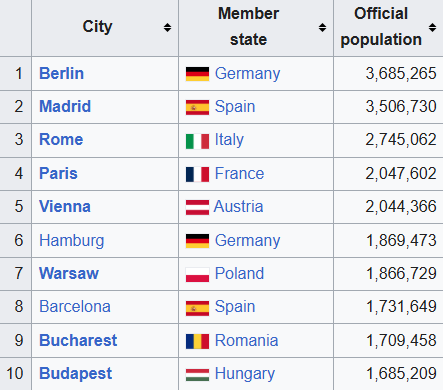
Each city is either a capital city, a world-renowned tourist attraction, or both. Hamburg, however, is neither. Despite being closer in size to Paris than Budapest, it receives far less international attention than either. Far more tourists visit Munich, a significantly smaller city. What gives?
The reality is Hamburg doesn’t have a tremendous draw for tourists. I was only there because I was about to board a cruise ship in nearby Kiel, and I’ve always heard Kiel is one of the ugliest cities in Europe. So we went to Hamburg. At the same time, I’d also always wanted to visit the city. I love Germany, and I wanted to see an urban area that isn’t jam-packed with tourists. A place people actually lived in.
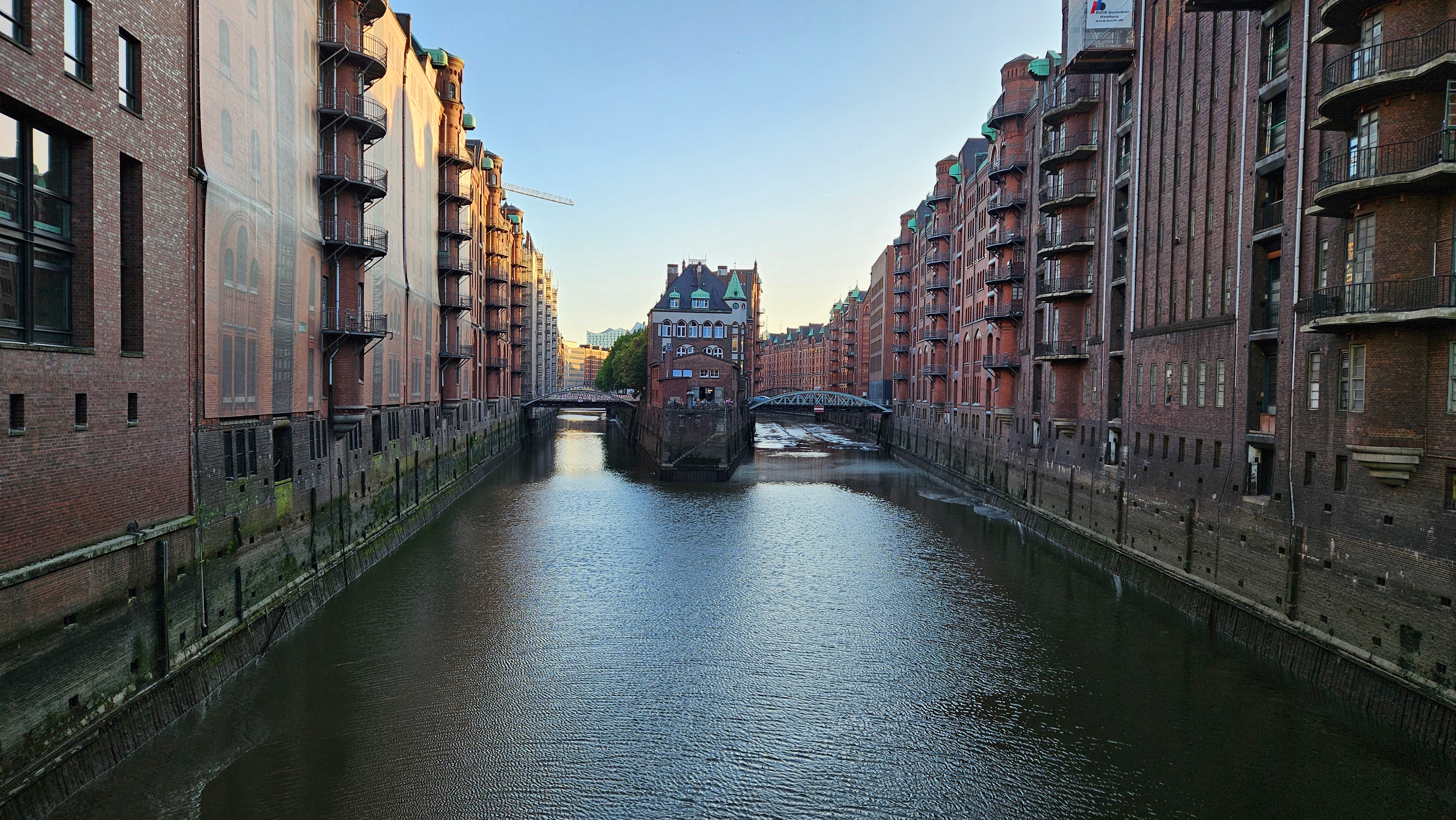
That’s Hamburg’s first saving grace. It’s a true city. Subway, bus network, dense neighborhoods, the whole shabang. But there aren’t a lot of tourists around. There are some - this isn’t the German equivalent of Peoria, but it is a far cry from other major European cities. The picture of Speicherstadt at the top of this article is undoubtedly the most famous viewpoint in the city (it’s part of the collage of the Hamburg Wikipedia page). When I went there to grab the required picture, there was hardly anyone around. This was in the evening of a beautiful June day. The bridge from which the picture is taken wasn’t packed. It wasn’t even crowded. Every once in a while a lone group would walk by, take a picture, and move on. It was nice.
One night at dinner, our waiter asked us where we were from. When we replied the United States, he looked at us with surprise and asked why we were in Hamburg. That question would make no sense in any of the other nine largest European cities. With the possible exception of Bucharest, you can’t swing a dead cat without hitting an American in any of them. I’ve been to restaurants in Europe where there were more Americans than locals. Yet in Hamburg, meeting an American is still noteworthy.
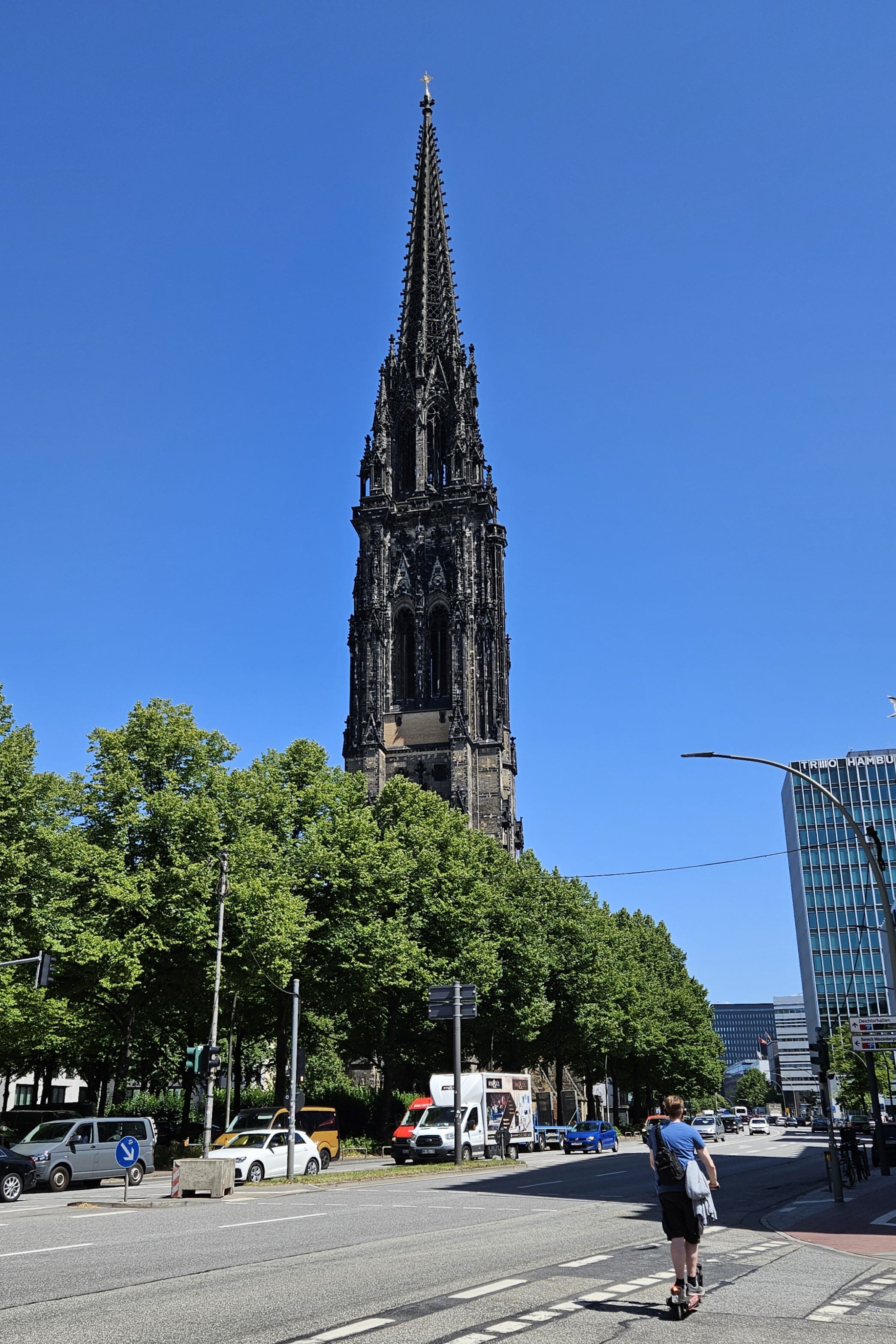
Of course, there’s a reason tourists don’t flock to Hamburg. It isn’t the most charming European city. Looking at photos of Hamburg from before World War II is depressing. Hamburg used to have a gorgeous old town and would have been an A-list attraction. Alas, starting and then losing the largest war in the history of the world laid waste to many German old towns, resulting in far more glass and steel today than one sees in most of Western Europe. Nothing exemplifies this better than St. Nicholas Church. When completed in 1874, it was one of the most important Lutheran churches in Germany, and, oh yeah, was the tallest building in the world. Then it was bombed in World War II, and today, only the central tower remains:
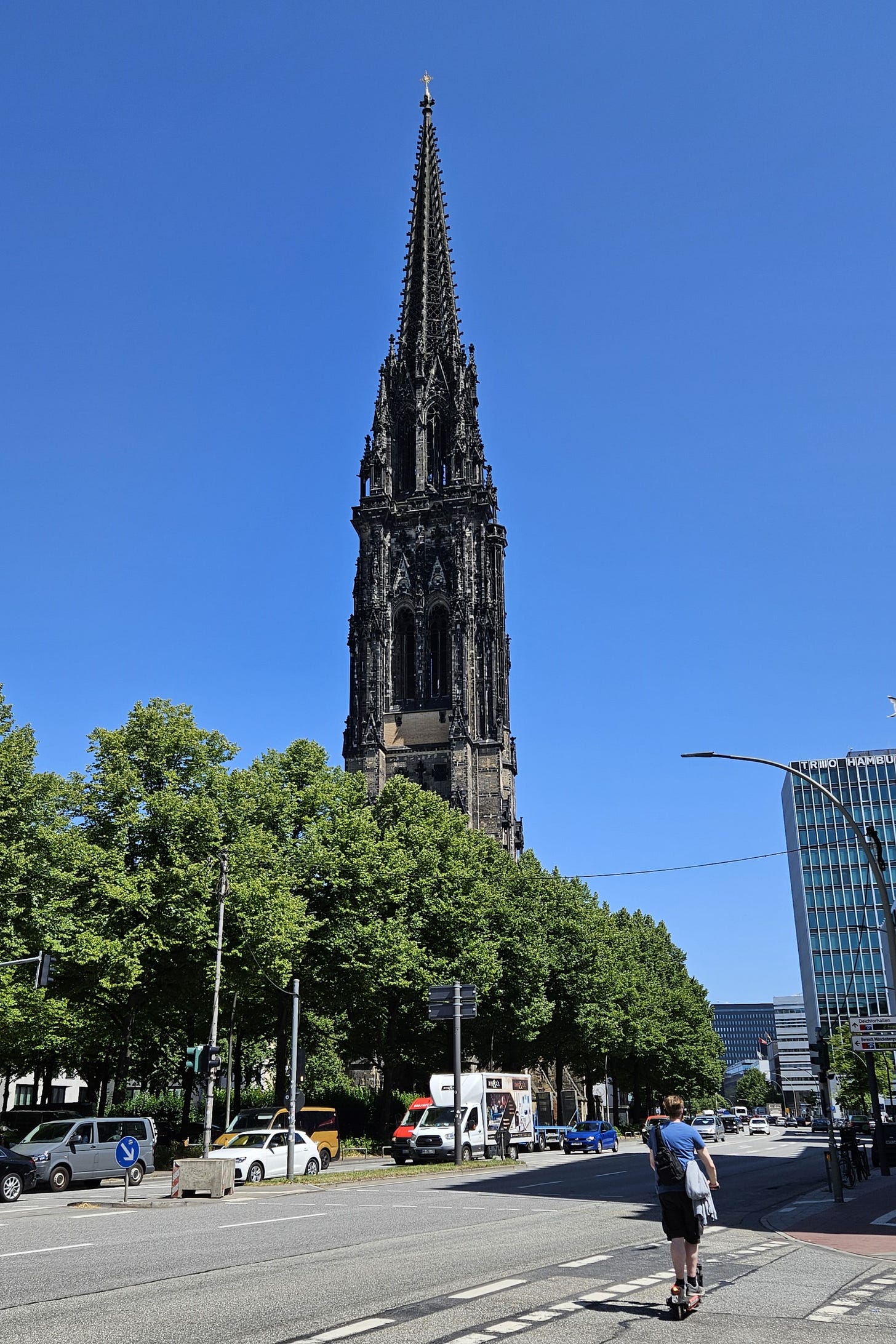
All that remains of St. Nicholas Church. Author photo. Lack of charming old town aside, Hamburg still has a lot going for it. Like all European cities, there is a high degree of walkability. There is a main pedestrian shopping street and many outdoor cafes. The nightlife is also supposed to be world-class, although traveling with two young children made that a moot point. Hamburg is a good city; it just isn’t a charming European one. Similar to Charlotte, North Carolina, it strikes me as a great place to live, but not a top place to visit.
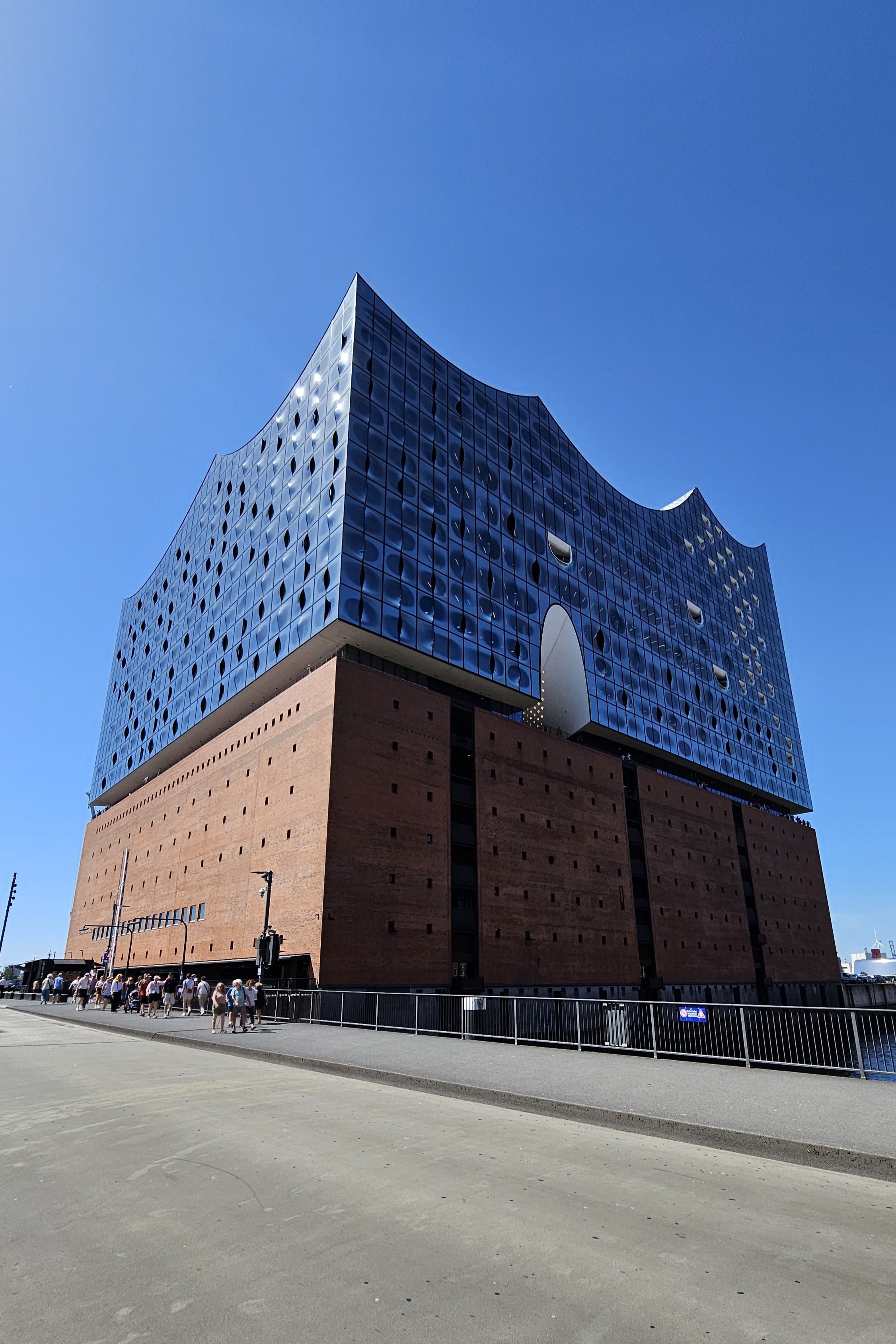
That said, there are a few worthwhile attractions. The Hamburger Kunsthalle is a respectable fine arts museum. The Elbphilharmonie is one of the most unique opera houses in the world, and the views from the top are superb. I would recommend against spending a week in Hamburg, but a visitor will not go wanting over 2-3 days.

If all this sounds like a somewhat mixed review, it’s because that’s how I felt about Hamburg. A pleasant city to spend a few days in, good for nightlife if you don’t have two kids in strollers, with a few decent attractions. As Samuel Johnson famously said, “worth seeing, yes; but not worth going to see”.
Then we went to Miniatur Wunderland. Usually billed as “the largest model railway in the world”, calling Miniature Wunderland a model railway is like calling Disney World an amusement park. While true, it’s a massive understatement. Miniatur Wunderland, is, fittingly, a miniature wonderland. It is an entire tiny world, with mind-blowing detail. There are miniature cities and villages and replicas from around the world. Yes there are model trains zipping back and forth on dozens of tracks, but there are also hundreds of model vehicles, thousands of model people, all hand created and unique. The entire place is the epitome of “bumping the lamp”. The level of detail is astonishing. I could have spent all day there. I spent a good 30 minutes watching the model airport alone. Planes that land but don’t have a gate will roll to a remote stand. The plane will stop and the lights in the plane will turn on. Then a bus will drive out to a plane, stop for a few moments, and then drive back to the terminal. The cabin lights turn off. It’s an entirely functional airport, just each plane is around a foot long. I don’t know that there’s any attraction on Earth comparable to Miniatur Wunderland. It is truly worth going to see, and single-handedly elevated Hamburg to a place I plan to revisit.
... leave the kids with the au pair, hit the Reeperbahn with your wife. I'm sure they have couples attractions. If nothing else, it seems a good opportunity to slip into a latex suit and give your beloved a thrashing (in good conscience).